


Before spring use in Central Virginia, check your battery system, brakes, tires, safety equipment, and street-legal compliance. If it hasn’t been professionally inspected in the past year, schedule service now to avoid summer breakdowns.
Call 540-369-2647 to schedule golf cart service in Fredericksburg.
Why Spring Service Is Non-Negotiable in Central Virginia
Golf carts in lake, river, and campground communities often sit through the winter months. Even when stored indoors, inactivity affects performance.
Common post-winter issues we see in the Fredericksburg area include:
- Reduced battery runtime
- Corrosion at terminals
- Low tire pressure and sidewall cracking
- Brake adjustment needs
- Electrical connection inconsistencies
Once temperatures rise and usage increases, these issues accelerate quickly.
Spring service prevents downtime during peak season — when appointment availability becomes limited.
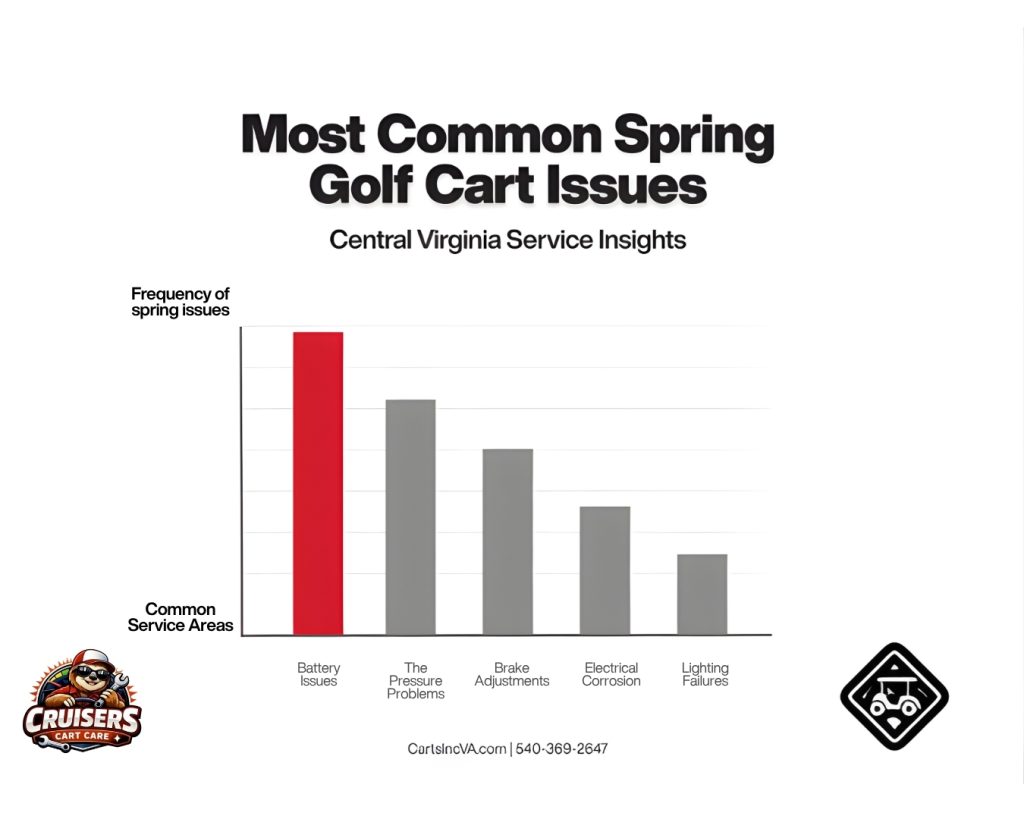
Battery System: The #1 Cause of Spring Breakdowns
In Central Virginia, battery performance drops significantly after winter storage — especially in lead-acid systems.
What Should Be Checked?
- Individual cell voltage balance
- Terminal corrosion
- Water levels (lead-acid only)
- Charger output and calibration
- Cable tightness and integrity
Signs You Need Service:
- The cart feels slower than normal
- Reduced driving range
- Delayed acceleration
- Charger runs unusually long
- Warning lights (for lithium systems)
Lithium batteries require less maintenance but still need charger compatibility verification and system diagnostics.
Professional testing can identify weak cells before total failure occurs.
Tires, Steering & Brake System Inspection
After months of inactivity, rubber and mechanical components require inspection.
Tires
Cold temperatures reduce air pressure. Driving with underinflated tires causes:
- Uneven tread wear
- Reduced range
- Poor handling
- Premature tire replacement
Check:
- PSI (manufacturer specification)
- Sidewall cracking
- Uneven tread wear
Steering & Suspension
Spring is also ideal for checking:
- Tie rod tightness
- Steering play
- Suspension wear
Loose steering reduces control — especially important in neighborhood and community roads.
Brakes
Brake systems should be inspected for:
- Pad wear
- Cable tension
- Smooth engagement
- Proper stopping distance
Street-legal LSVs require reliable braking for road compliance.
Electrical & Safety Systems
Before regular seasonal use, inspect:
- Headlights
- Brake lights
- Turn signals
- Horn
- Reverse alarm
- Mirrors
- Windshield integrity
Loose connections or corroded wiring are common after winter humidity.
Safety systems are not cosmetic — they are compliance and liability factors.
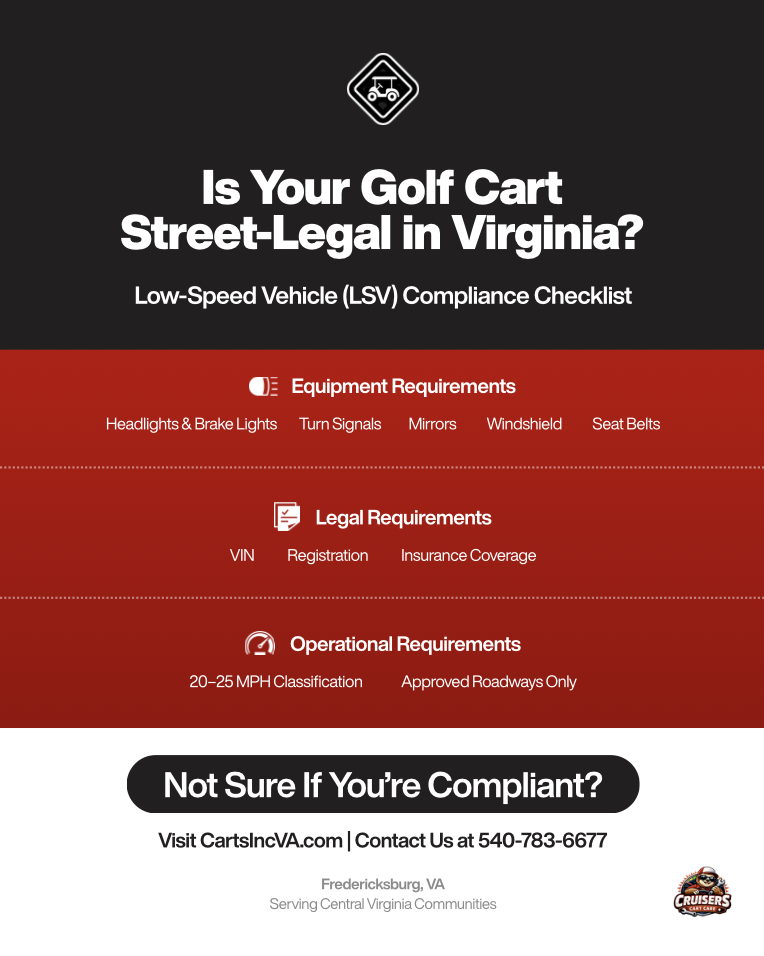
Street-Legal Golf Cart Requirements in Virginia (LSV Guide)
If your cart is operated on approved public roads in Virginia, it must qualify as a Low-Speed Vehicle (LSV).
Virginia Requirements Include:
- Top speed between 20–25 mph
- Headlights, brake lights, and turn signals
- Reflectors
- Rearview mirrors
- Windshield
- Seat belts
- VIN
- Registration
- Insurance
Many owners assume modifications automatically make a cart street-legal. That is not always the case.
Improperly equipped carts may result in:
- Traffic citations
- Insurance complications
- Liability exposure
Professional verification ensures compliance before seasonal use increases.
Accessories & Upgrades to Consider Before Summer
Spring is also the ideal time to evaluate functional upgrades:
- Enclosures for unpredictable spring weather
- Rear seat kits for family transport
- LED lighting upgrades
- Upgraded batteries (lithium conversion)
- Lift kits for campground terrain
Installing upgrades before peak season ensures availability and avoids delays.
Why Professional Golf Cart Service Protects Your Investment
While basic inspections can be done at home, professional services provide:
- Diagnostic testing equipment
- Compliance verification
- Warranty-aware servicing
- Proper torque specifications
- Preventive replacement insight
At Carts Inc., service is a long-term commitment — not a transaction.
A recent customer shared:
“Deserves more than 5 stars… Cori stopped by my house and fixed our cart in the garage. That’s unheard of.”
That level of service is what builds lasting relationships in Central Virginia communities.
When Should You Schedule Spring Service?
Schedule service if:
- Your cart has not been inspected in 12 months
- Battery performance has declined
- You plan heavy seasonal use
- You recently purchased a used cart
- You’re unsure about street-legal compliance
As lake and campground activity increases, appointment availability decreases.
Early scheduling prevents mid-season downtime.
Final Thoughts
Spring in Central Virginia marks the start of increased use in lake, river, and campground communities. A short inspection today can prevent a costly breakdown in June.
If you’re unsure about your battery health, brake system, or street-legal status, schedule service now. Call 540-369-2647 or visit cartsincva.com to book your spring appointment.
Frequently Asked Questions
Most golf carts in Central Virginia should be professionally serviced at least once per year. If your cart is used frequently in lake, river, or campground communities, a spring inspection before peak season is highly recommended.
Lead-acid golf cart batteries typically last 4–6 years with proper maintenance. Lithium batteries often last longer but still require periodic inspection and compatible charging systems to maximize lifespan.
To qualify as a street-legal Low-Speed Vehicle (LSV) in Virginia, the cart must include headlights, brake lights, turn signals, mirrors, a windshield, seat belts, a VIN, registration, and insurance. It must also meet federal safety standards and operate within approved speed limits.
You may only drive your cart on approved public roads if it qualifies as a properly equipped and registered LSV under Virginia law. Standard golf carts without required equipment are restricted to private property.
Yes. Carts Inc. provides golf cart service, diagnostics, battery testing, and repairs for owners throughout Fredericksburg and Central Virginia, regardless of where the cart was originally purchased.